
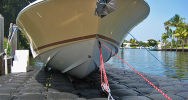
 Boat Docks
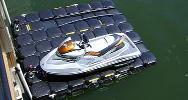 PWC Docks
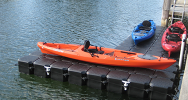 Kayak Docks
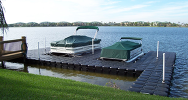 Floating Walkways
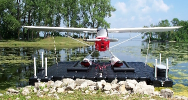 Seaplane Docks
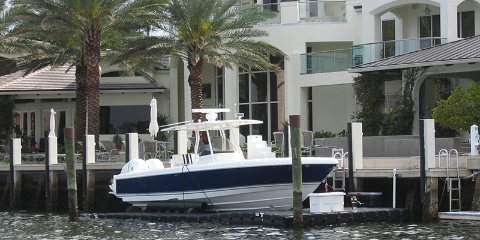 Residential Docks
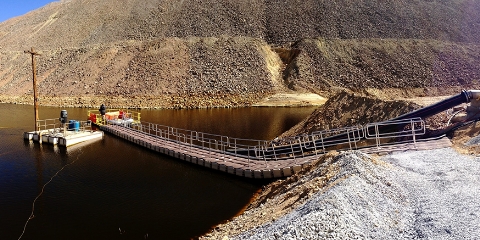 Commercial Docks
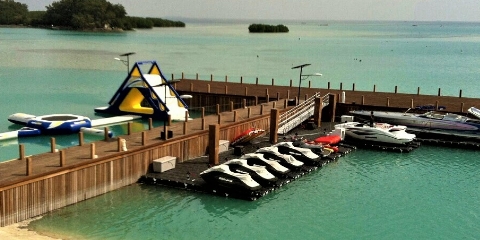 Saltwater Docks
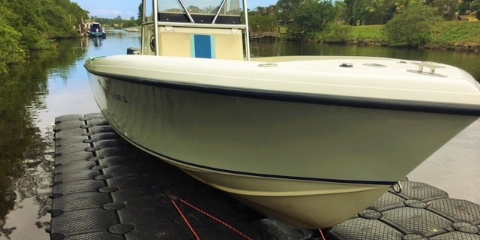 Lake & River Docks
 Government Docks
 Military Docks
 Parks & Recreation Boat Docks
 GSA Information
 Dealer Application
 Dealer List
 Jet Dock Advantages
 Boat Lift Photos
 Boat Lift Videos
 Knowledge Center
 Marine Forecasts
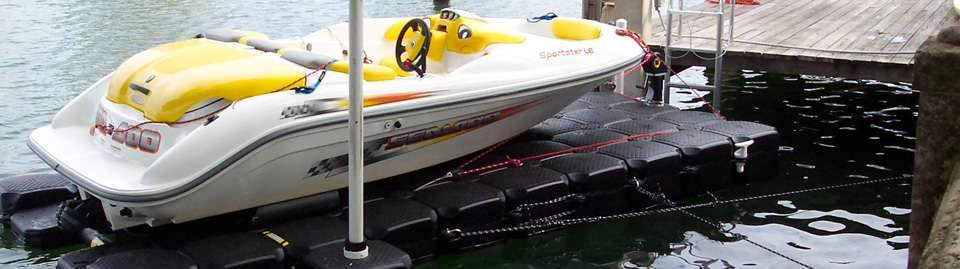
Boat Lift for Fluctuating Water Levels
Floating boat docks can handle the unique challenges presented in fluctuating and tidal waters. Fluctuating waters can leave traditional boat lifts, davits, boat hoists and elevator lifts in an inconvenient position for use: either too high or too low for your boat at water's level. A FLOATING boat dock product must be considered, together with the use of a Tide Manager System (PDF) for mooring.
Jet Dock's floating boat lifts are ideally suited for fluctuating and tidal waters. No matter where your water level is at that moment, with Jet Dock, you will always have a safe boarding platform right at the water's edge. And customers with an existing floating dock (PDF) can simply tie their Jet Dock directly to it.
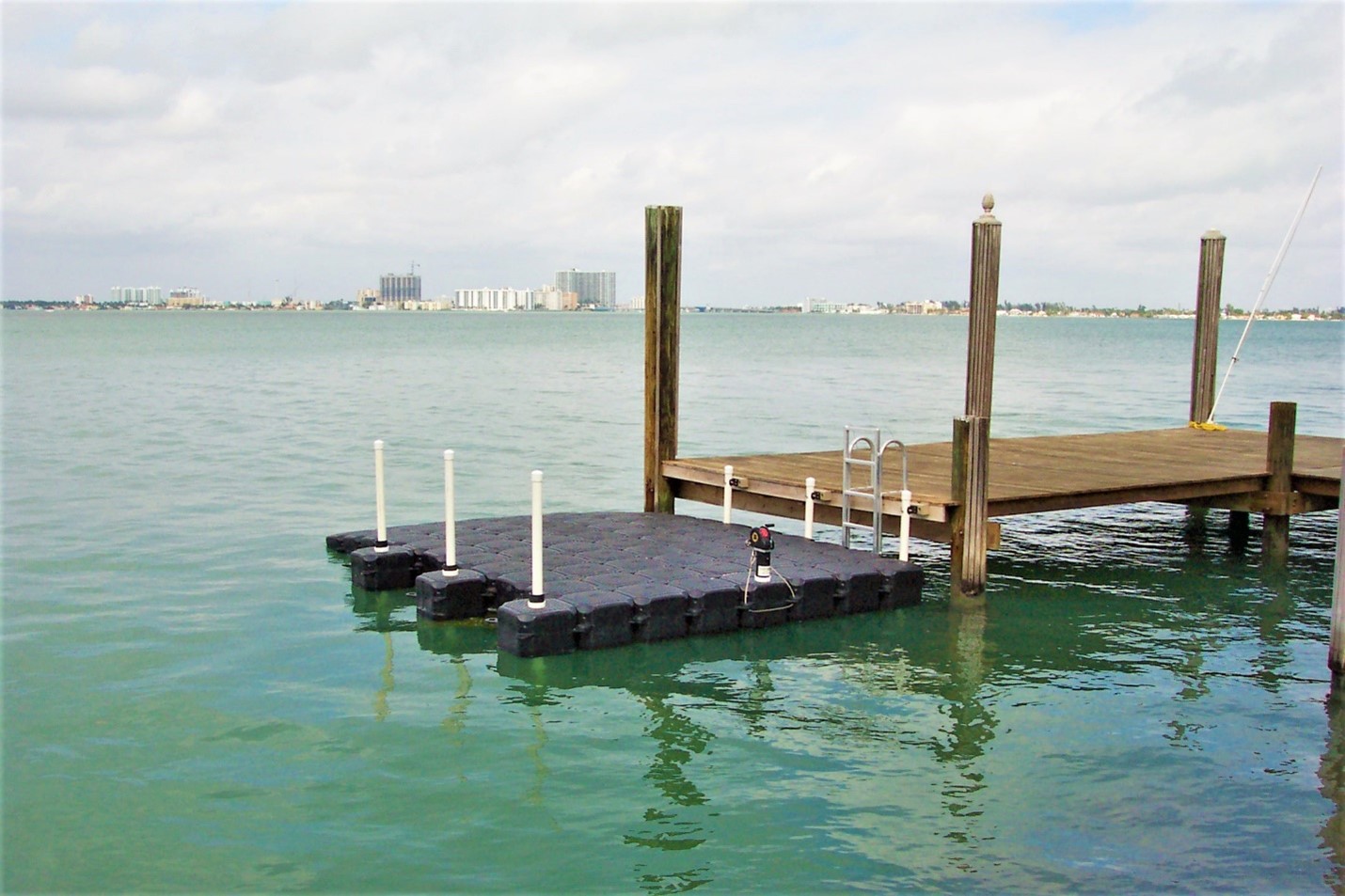
The Perfect Floating Dock for Tides
If you have no existing dock, seawall or bulkhead whatsoever, your Jet Dock floating ocean dock is still the ideal solution. The Stand-alone Tide Manager will moor your Jet Dock floating boat docks in a fixed position that will not move side to side or front to back. It will only go up and down with your water levels. It can even lie on the sea floor during a no-water condition!* The more challenging the marine environment, the more likely Jet Dock is the answer for you!
* Some boat docks require a certain minimum depth at all times. Contact Jet Dock for details.
Beyond Ocean Docks
Water doesn't move the same way in two places, so a boat lift for fluctuating water has to respond to multiple causes. Jet Dock's floating systems adapt to whatever is driving change at your site.
Tidal Rivers and Estuaries
Twice-daily tide swings turn a fixed lift into a guessing game, stranding your boat too high at low tide and submerging the lift at high tide. As a floating dock for tides, our system rises and falls with each tidal cycle, keeping your boarding height consistent, no matter where the tide sits. The same design holds up for ocean docks facing open coastal exposure, not just protected estuaries.
Reservoirs and Lakes with Seasonal Drawdown
Managed reservoirs and lakes with scheduled drawdown can drop several feet over a season, leaving fixed docks high and dry or unreachable. Our modular sections move with the water line, so your dock stays usable through the drawdown instead of sitting unused until levels come back up.
Storm Surge
A surge event can push water levels well past normal range in a matter of hours. Because the dock floats rather than holds a fixed position, it rides the surge up and settles back down once conditions clear, instead of taking on the structural stress a fixed lift absorbs.
Drought and Low-Water Conditions
When water levels drop further than expected, our stand-alone Tide Manager system lets the dock rest safely on the lake or riverbed until levels return*, rather than leaving a fixed structure stranded above dry ground.
* Some ocean docks require a certain minimum depth at all times. Contact us to learn more.
Floating Dock vs. Fixed Dock for Changing Water
A fixed lift is built for water that stays put. The moment your water level moves, that rigid structure works against you instead of for you. Here's what breaks down, and how a floating boat lift for fluctuating water avoids each problem.
Stranded Boats
A fixed lift sits at one set height, so when the water drops, your boat can end up sitting above the waterline with no way to launch it, and when the water rises, the lift itself can go partly underwater. A floating dock rises and falls with the surface, so your boat stays afloat and ready to launch regardless of where the water line sits that day.
Unsafe Boarding Height
As water levels shift under a fixed lift, the gap between the dock and your boat grows or shrinks with it, turning a routine step aboard into a stretch, a jump, or a climb. Since a floating dock moves with the water instead of standing above it, the boarding height stays close to constant, so getting in and out doesn't change with the season or the tide.
Structural Stress
A fixed lift has to physically resist the water pushing, dropping, or surging against it, and that resistance is exactly what leads to bent posts, cracked pilings, and hardware failure over time. A floating dock doesn't fight the water. It moves with it, so a surge or a swing in water level passes under the dock instead of into it.
Where a fixed lift treats every change in water level as a problem to survive, our floating system treats it as normal operating conditions.
Get a Boat Lift Built for Fluctuating Water
Water levels change, and your dock should change right along with it. Our team walks you through the right floating dock or Tide Manager setup for tidal rivers, drawdown lakes and open ocean sites alike. Contact us now to talk through your site, or use our Find Your Dock tool to start building your configuration today.


Frequently Asked Questions About Boat Lifts for Fluctuating Water
How much water-level fluctuation can the system handle?
The amount of vertical movement depends on your specific configuration and which mooring option you use: tie-off or the stand-alone Tide Manager. Our team sizes the setup to your site's actual range during a consultation rather than applying a single number to every location, since a tidal estuary and a drawdown reservoir don't move the same amount.
How does the dock perform in current or wave action, not just changing water levels?
Vertical water-level change and horizontal forces like current and wave action are different challenges, and we build our floating systems to manage both. The dock's mooring hardware keeps it positioned against lateral push from current or waves while the floating structure itself continues to rise and fall freely with the water.
Can I add a floating dock to an existing fixed dock or seawall, or do I need a new installation?
Both are options. If you already have a fixed dock or seawall, our floating ocean docks can often tie in alongside it using our tie-off mooring approach. If you're starting from nothing, the stand-alone Tide Manager system gives you a complete floating installation without requiring an existing structure first.
By answering a few quick questions we will be able to tell you which dock or boat lift is the perfect fit for you.
Start Now! ▶Related Articles
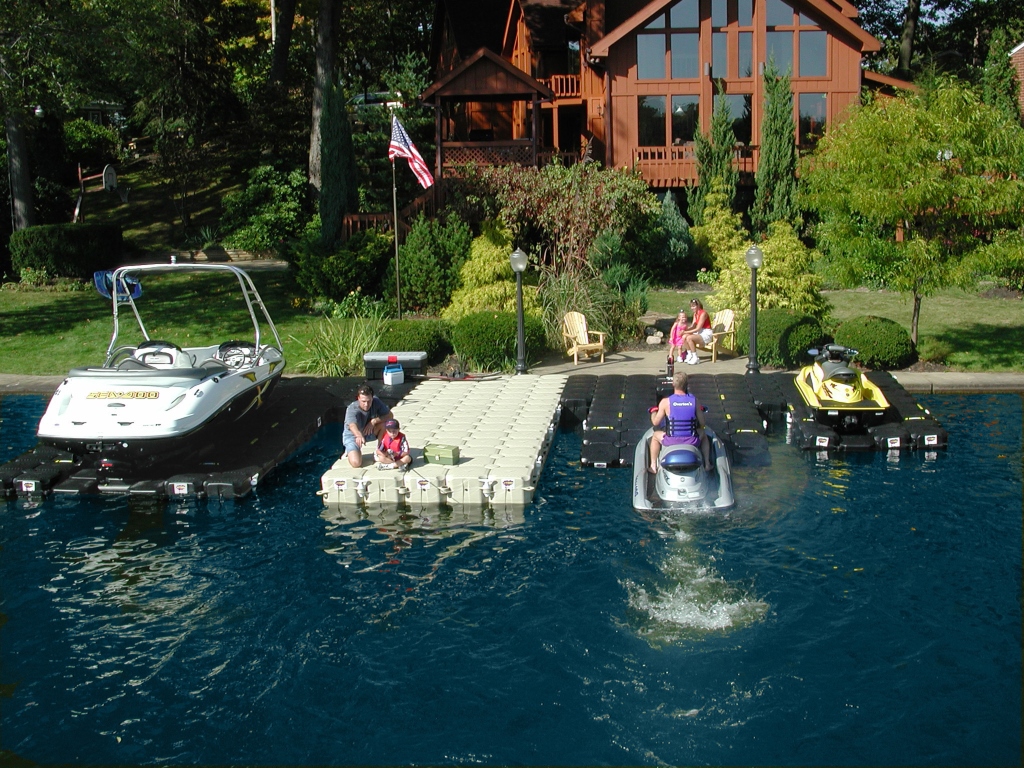
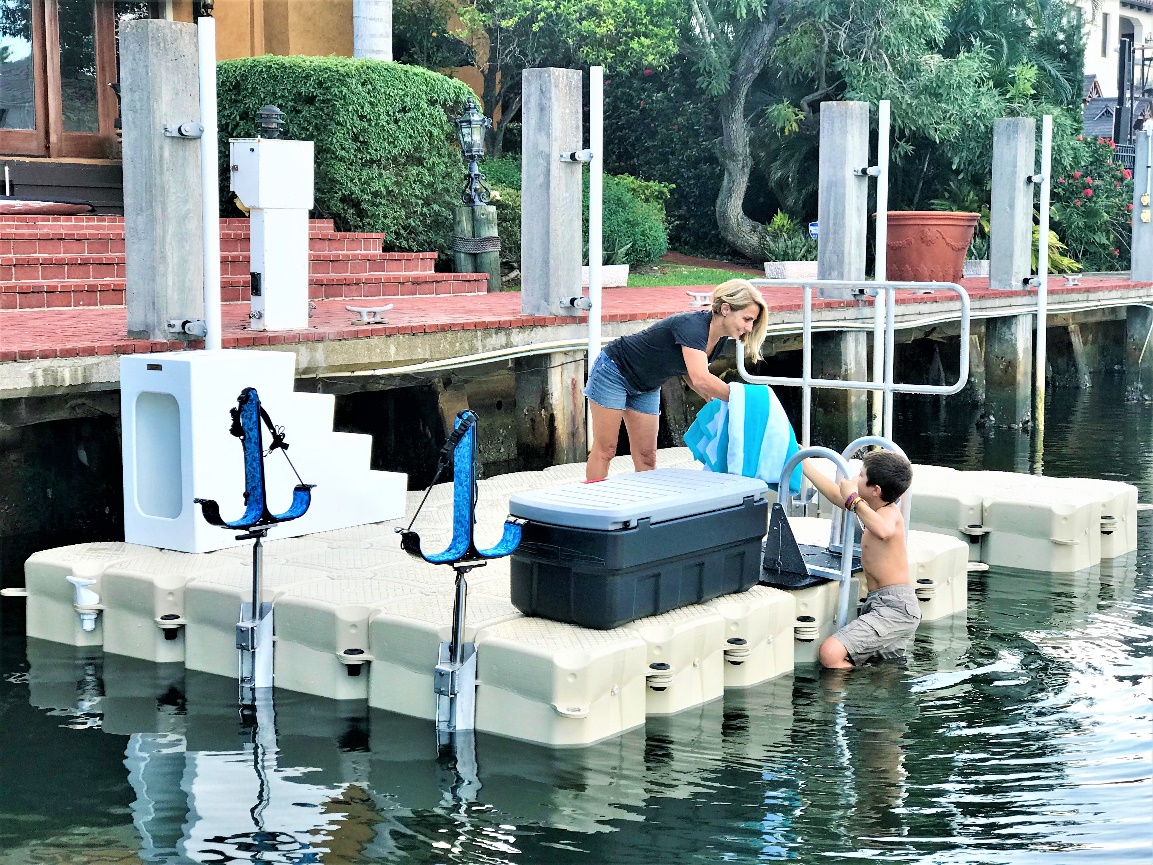
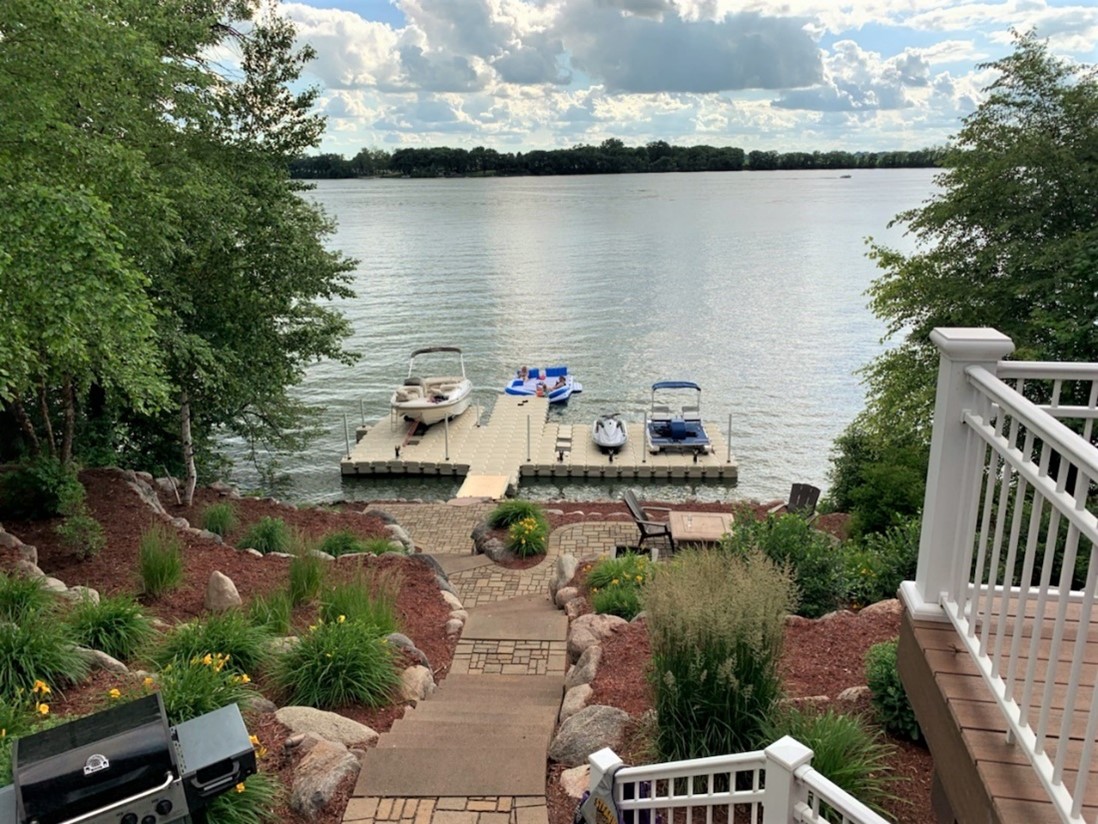
Jet Dock Systems manufactures specialized floating boat lifts and drive-on docking systems for a wide variety of watercraft in just about any marine environment. Our headquarters and manufacturing operations are located in Cleveland, Ohio. We have an additional facility and staff in Fort Lauderdale, Florida as well as boat lift dealers all over the world.